Pretend. Play. Learn – The Value of pretend play in Early Learning Education
If your child has recently tried to charge you for an invisible cup of tea, insisted the lounge is a pirate ship, wrapped your arm in a bandage after claiming that the teddy bear is the doctor, congratulations! You have joined the magical world of dramatic play, where the play may be pretend, but the learning is more real then simply meets the eye!
One moment your child is running a busy café, serving pancakes made of mud that they claim to be chocolate chips before jetting off to the moon for a quick lunch break to deliver some very important letters to the planets surrounding us. To the adult eye it can look like dress ups, giggles and a whole lot of very serious pretend conversations but behind the costumes and stories something much bigger is happening, you are witnessing one of the most powerful ways for children to explore idea’s, relationships and their understanding of the world around them. You are witnessing your child in the depths of their learning Journey!
Let us have a look at what is really happening within dramatic play:
Brain boosting adventure – How Dramatic play builds on cognitive function?
A brain workout disguised as fun! As your child imagines stories, solves pretend problems and creates new worlds they are building some of the most important cognitive skills that help them think, learn and understand the world around them.
When children play ‘pretend’ they are:
- Problem solving: From deciding what to do when their café run’s out of cake, or what the next step might be to make their stuffed cat feel a little better in their vet clinic – The world of dramatic play although fun, isn’t void of problems that may need to be solved!
- Planning and organising their idea’s: Who will be the chef? Who will be the customer? Where is this play happening? The beauty of the imagination is that with a little organisation of these ideas you can be or do anything!
- Imagination and creativity: Want to have a tea party but do not have any teacups? Never mind, it only takes the simplest object to become something useful or magical
- Building memory and focus: Remembering roles, storylines and what happens next in their play. Often taking these concepts from real life and embedding them through play.
Chatter, stories and big ideas – How language development is strengthened?
When children are deep in the world of dramatic play, their imaginations take the lead and language skills come racing along for the next big adventure. Simple play turns into lively storytelling, exciting conversations, big ideas and occasionally dramatic negotiations about the role of both the dragon and the doctor.
During dramatic play children are:
- Learning new words as they explore roles and roleplaying,
- Holding conversations with their peers, friends, siblings as they articulate their ideas into words to create different characters.
- Building on their storytelling skills, as they create stories with plots, beginning’s, middles and very exciting endings.
- Express their ideas and feelings through play, articulating big concepts through fun and engaging play

Friendships, feelings and teamwork – The Key to developing social skills.
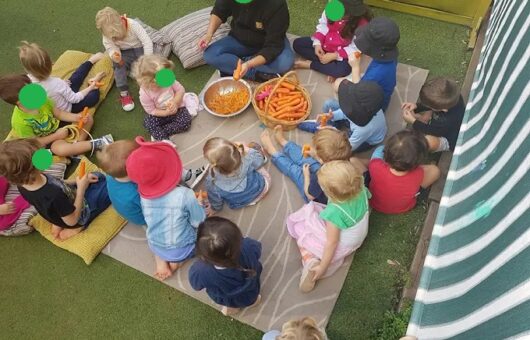
Lets not forget that dramatic play brings children together. To keep the story going children need to listen to each other’s idea’s, share roles and sometimes compromise. Throughout this play children learn to take turns, share ideas with one another, initiate and accept invitations for play and work in team-based environments helping children to build and maintain friendships. Dramatic play allows feelings to be explored and builds empathy and emotional understanding; these are important life skills as children continue to grow and build relationships. You hear this growing understanding when children make statements through play such as “This teddy is feeling sad, maybe she needs a hug!’ or display body language such as soothing a doll my gently wrapping and rocking the doll backwards and forwards. Children will often use play to process feelings they may have also had in certain scenario’s whether that be sadness, happiness, excitement or the array of emotions that a child may experience.
Dramatic play allows children to continue to develop what we like to call their ‘SOCIAL SUPERPOWERS!’. Children are building the confidence to share their ideas, understand other perspectives and learn the power of communication and negotiation all of which are key aspects of social and emotional development supported by the The Early Years Learning Framework.
Move, shake, build, explore – The physicality of play.
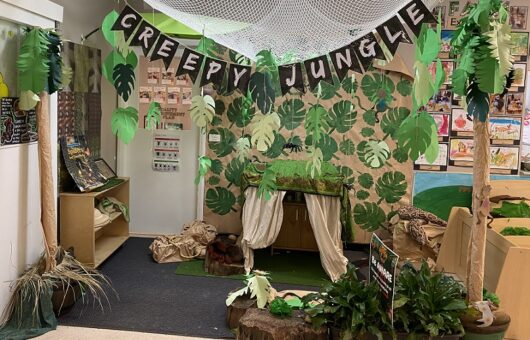
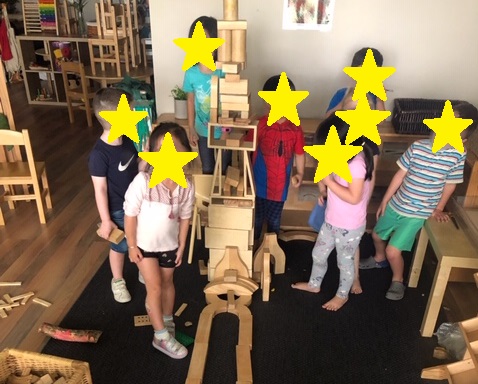
The play you are watching from the outer looks like endless energy, but what if we told you that this ‘energy’ and physical aspect is impacting your child and building on fundamental movement skills. Whilst you are watching your child tip toeing through the jungle to rescue animals. building rocket ships from cushions and blocks, racing to deliver packages to the post office or flying like a superhero across the playground, you are watching playful movements that are building strength balance and coordination and your child is gaining confidence in their own bodies and movements. Children create their own environments whether that be a kitchen or driving their imaginary truck, and as a result they are building on their spatial awareness as they learn to move within this space.
Tiny hands are doing big work, pretending to stir the soup, dressing dolls, carefully pouring tea and writing menus or shopping lists. Not only is dramatic play supporting fundamental gross motor skills but creating a space that nurtures fine motor skills in children’s hands and fingers, its learning that does not feel like learning, preparing children to continue to develop their skills in tasks such as writing, drawing and self-help skills such as zipping zippers and buttoning shirts.
So now you can see that behind what looks like childish play with every “Lets Pretend…” a whole new world of learning can be happening right in front your eyes.
Next time your child asks you to jump into their speedboat, with the offering of a refreshing green tea if you finish practicing your ballet routine that you’re currently on your way to perform deep within the jungle on the other side of the river.
Put your life jacket on.
Take a sip.
Do a twirl.
and do not forget your bug spray.
Because You have been cordially invited to enter your child’s world of Dramatic play.
Written by Ashlee Smith, Director Learn and Laugh Lewisham